Liquid-Liquid Chromatography for Natural Extracts

LiLiCHRO

Natural extracts are chemically complex, variable and
often difficult to process with packed columns. LiLiChro’s
centrifugal partition chromatography platform provides a
flexible, support-free route from early feasibility testing to
preparative production.

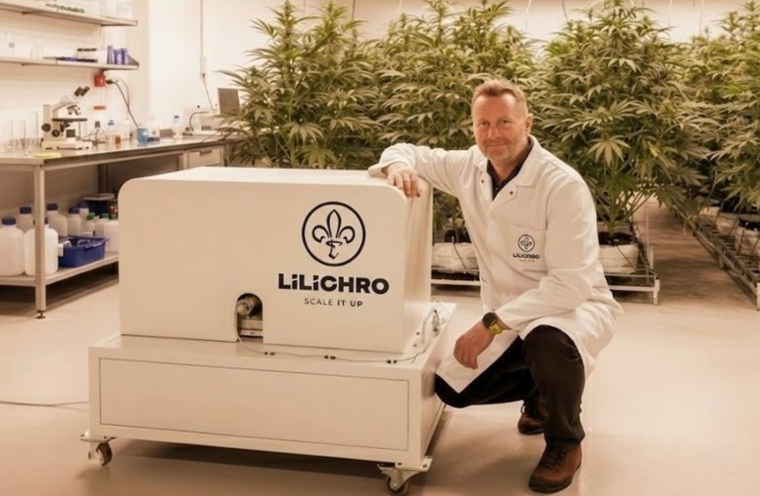
Lilichro natural extract, botanical extract and cannabis separation by liquid-liquid chromatography

LiLiChro supports pharmaceutical teams with the knowledge, tools, and technology to evaluate CPC as a practical part of a modern purification strategy.

Deep Expertise
Feasibility Studies
Scalable Systems
Partner in Your Success

Natural Products

Natural Extracts are not clean standards

The chemical profile of a botanical extract depends on the plant, harvest, extraction conditions and every processing step that follows. Valuable targets are surrounded by pigments, waxes, lipids, sugars, closely related metabolites and other compounds with similar behaviour.
The purification method must handle the extract that actually enters the process—not an idealised analytical standard.

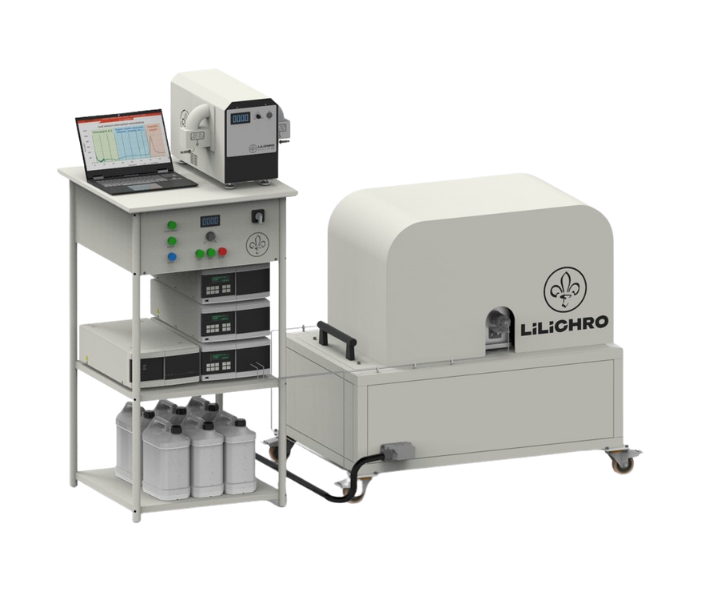
maxilili and minilili preparative pilot-scale liquid-liquid chromatography
01

Complex matrices consume column capacity

Pigments, waxes and co-extracted compounds compete for the packed stationary phase. Loading decreases, separation performance changes and columns require more frequent cleaning or replacement.

02

Fixed column chemistry limits flexibility

When closely related compounds cannot be separated on the available bonded phase, changing the column may still fail to provide the required selectivity.

03

Valuable compounds can be lost

High-value natural compounds may adsorb irreversibly or desorb incompletely from silica and other solid stationary phases, reducing overall recovery.

04

Scale changes the economics

A method that works at analytical scale can become slow, pressure-intensive and expensive when the required quantity increases from milligrams to grams or kilograms.

Where CPC Can Create Value in Natural-Product Purification

Typical targets: EGCG, catechin, epicatechin, resveratrol, anthocyanins and related polyphenols.

CPC can separate high-value polyphenols from complex plant matrices and distinguish between structurally related compounds through solvent-system selectivity.

Typical targets: ginsenosides and other steroidal or triterpenoid saponins.

Liquid-liquid partitioning can provide useful selectivity for structurally dense glycoside mixtures where packed-column recovery or loading becomes limiting.

Typical targets: catharanthine, vindoline and other neutral or ionisable alkaloids.

Solvent composition and pH can be adjusted to change partition behaviour and improve separation between the target and closely related impurities.

Typical targets: curcumin, related diarylheptanoids, capsaicin and dihydrocapsaicin.

CPC can support enrichment or isolation from pigment-rich oleoresins and concentrated botanical extracts.

Typical applications: chlorophyll removal, colour reduction and removal of unwanted lipophilic matrix components.

CPC can selectively remove interfering compounds while preserving the value of the
desired fraction.

Typical targets: selected non-volatile or difficult-to-distil terpenoids and aromatic components.

CPC is worth evaluating when liquid-liquid partitioning provides useful selectivity beyond what can be achieved through evaporation or distillation.

Why CPC Works Better for Complex Natural Extracts

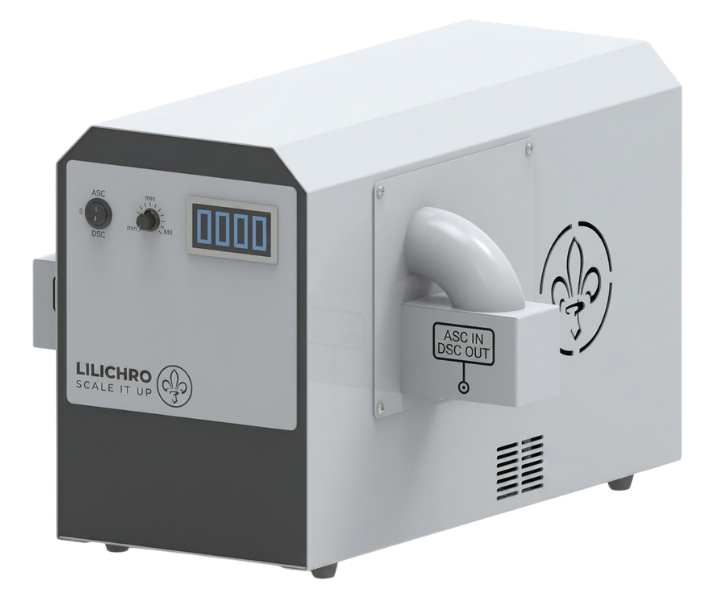
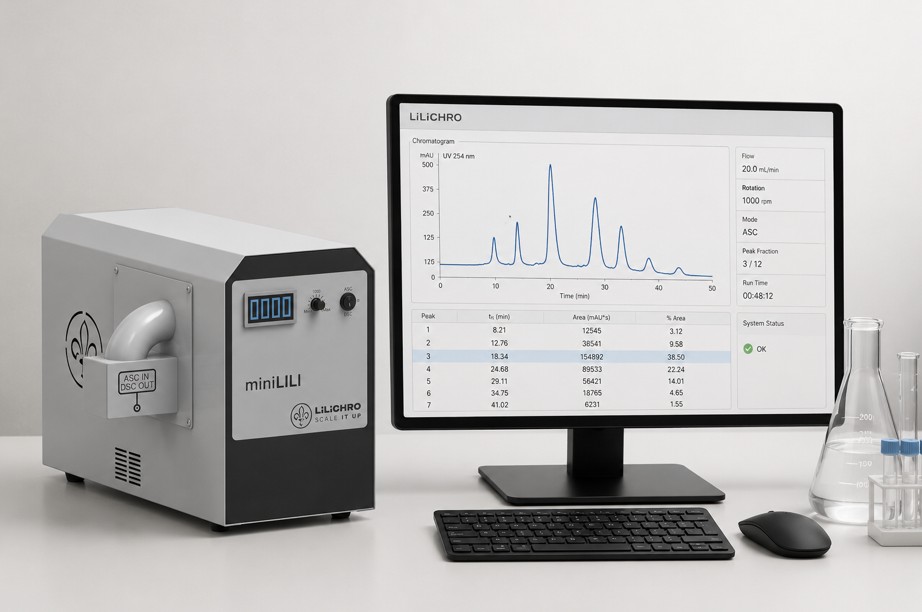
LiLichro MiniLiLi liquid-liquid chromatography instruments
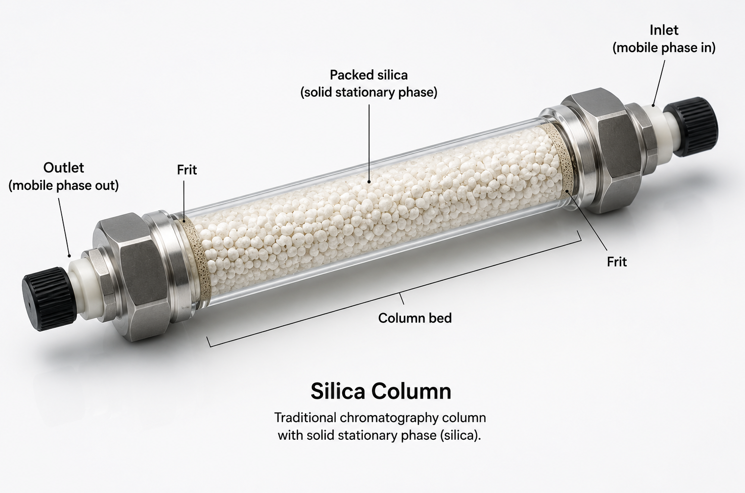
LiLiChro: With liquid-liquid chromatography you do not need silica columns.

1. No packed column to foul

Crude extracts use up all your columns

There is no silica bed to clog, degrade or replace. CPC can therefore be particularly valuable for crude, pigment-rich and column-fouling botanical matrices.
Feed solubility, precipitation and particulate content must still be controlled.

Linear scalability through lilichro's chromatography equipment

2. Flexible selectivity

Extract samples can differ

Both liquid phases can be changed—including the stationary phase. Instead of being limited mainly by purchased column chemistry, method developers can adjust solvent composition, phase direction, pH and operating mode to find new selectivity.

Linear scalability through lilichro's chromatography equipment
Lilichro preparative liquid-liquid chromatography, minilili analytical and method development

3. High Yield and Recovery Potential

Don’t lose valuable compounds

Because there is no solid support, CPC reduces the risk of irreversible adsorption. Valuable compounds remain in a liquid phase throughout the separation, supporting high recovery in suitable applications.

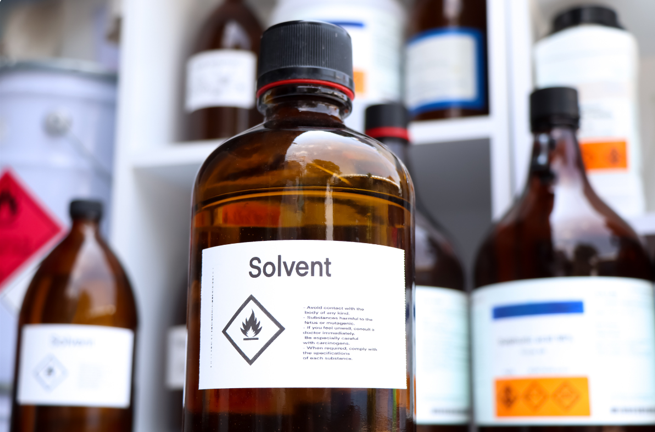
LiLiChro low solvent usage - liquid-liquid separation

4. Scalable platform

From lab to Production

The same solvent system and partition principle can provide the foundation for moving from method development toward preparative and industrial production.
Flow, loading, rotor speed and stationary-phase retention must still be validated at every scale.

LiLiChro low solvent usage - liquid-liquid separation
Column-free
0
packed silica columns
Scale range
1–200 mg to 2–3 kg
typical sample range across the LiLiChro platform*
Solvent recycling
Up to 85–95%
solvent recycling in suitable workflows*
Screening
7 days
for a typical Screening Study*

From Extract to Production: A Practical CPC Workflow

1.

Understand the extract

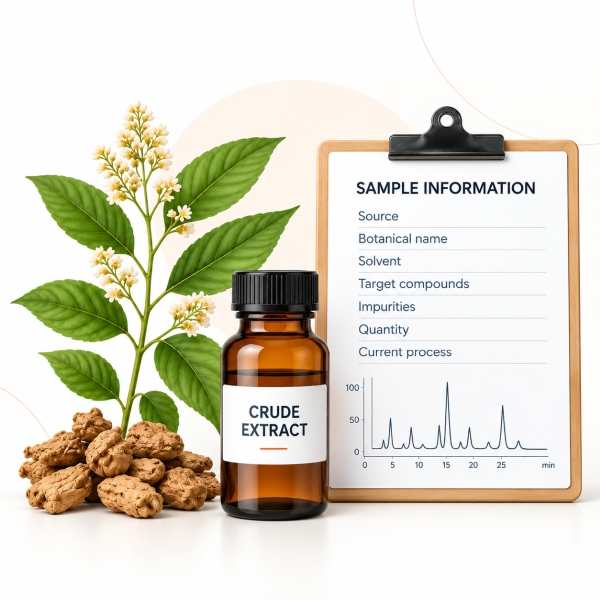
Understanding the botanical extract and sample information
Source extraction target impurities current process quantity
2.

Check sample behaviour

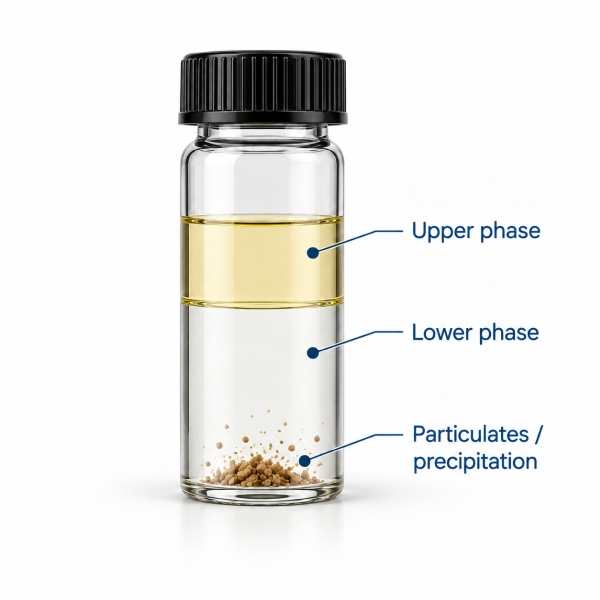
Checking sample behaviour in upper and lower liquid phases
Solubility precipitation particulates phase settling emulsions
3.

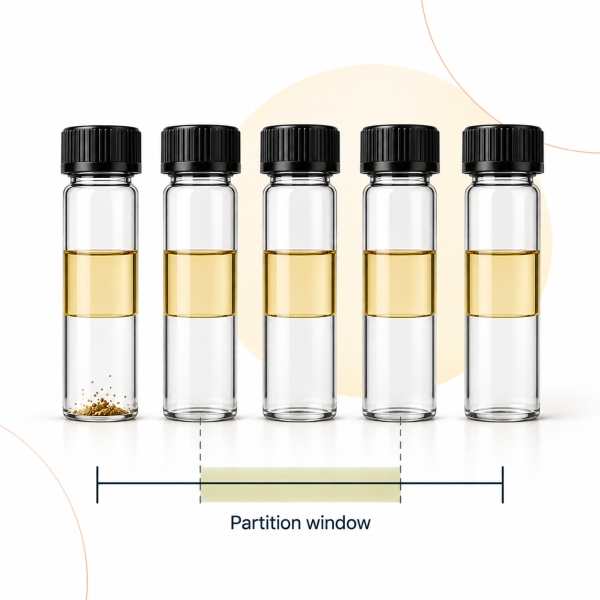
Find the partition window

Finding the optimal liquid-liquid partition window
Partition coefficient selectivity phase stability sample compatibility
4.

Optimise and transfer

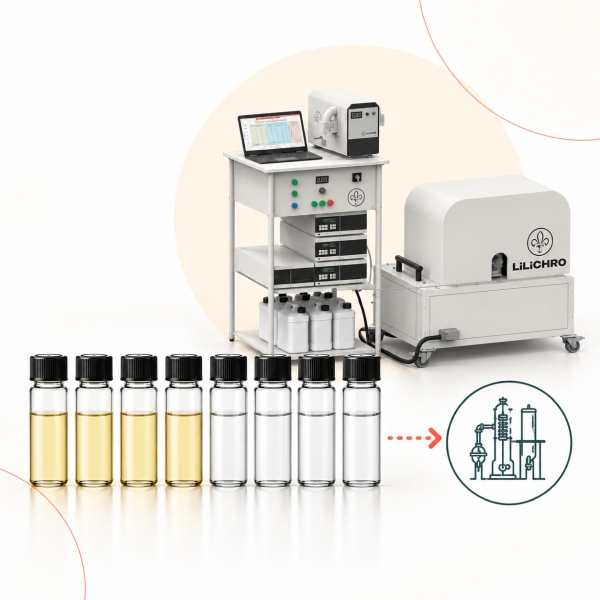
Optimising and transferring the purification process to LiLiChro equipment
Loading flow rotation stationary-phase retention fraction timing

Botanical care

Pre-conditioning may include filtration, concentration or dewaxing. The goal is the shortest robust route to the valuable fraction.

Frequently Asked Questions

Often, yes. CPC has no packed solid stationary phase and is therefore more tolerant of complex matrices.
However, solubility, particulates, precipitation and emulsion behaviour must still be checked.

Purity is compound- and method-specific. CPC may be used for enrichment, fractionation, remediation or final isolation. Published natural-product studies report results above 97–98% purity for selected compounds.

Not automatically. CPC can replace a solid-phase step when recovery, fouling, loading or consumable cost is the bottleneck. It can also work before HPLC as a capture or enrichment step.

It is different from selecting a packed-column chemistry, but it can be approached systematically. Candidate solvent systems are screened for partition coefficient, selectivity, sample solubility and phase behaviour.

The same biphasic solvent system and partition behaviour provide a strong transfer basis. Flow, rotor speed, stationary-phase retention, loading and fraction timing must still be validated on the target instrument.

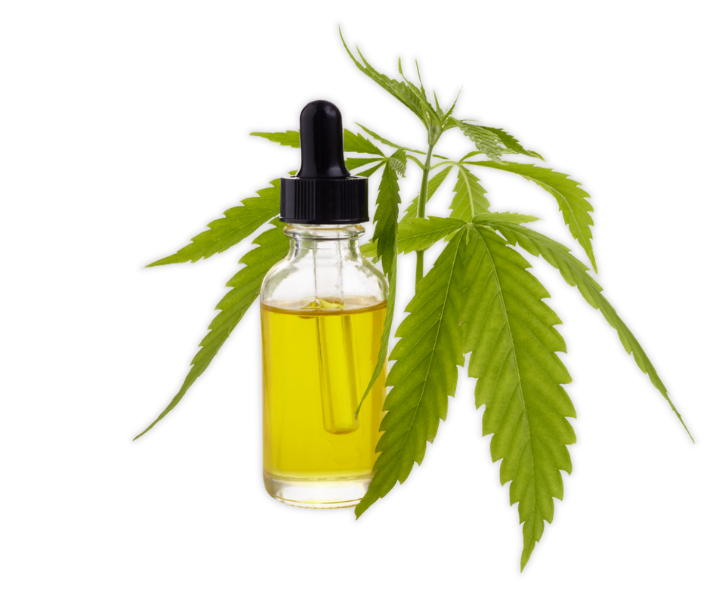
Lilichro natural extract, botanical extract and cannabis separation by liquid-liquid chromatography
maxi-mini-combination

Explore Cannabis Purification Insights

Discuss Your Purification Challenge

Fill out the form below!