

Laszlo Frici Nemeth
Founder of LiLiChro and inventor of its patented CPC and cell technology


Could CPC improve your preparative purification process?
LiLiChro manufactures centrifugal partition chromatography (CPC) instruments with low pressure, low OPEX, and high yield.
Find out if CPC is a more efficient fit for your purification workflow!
Free consultation assessment • Expert-reviewed • No commitment

After 31 years in separation sciences, I constantly see companies miss out on massive OPEX savings.
I developed this assessment to tell you quickly and honestly whether CPC is worth exploring for your specific case.”
– László Frici Németh
What is Centrifugal Partition Chromatography?
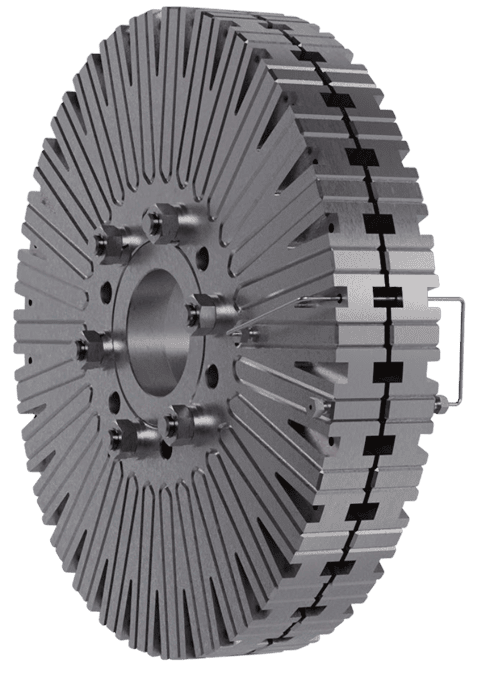
Centrifugal Partition chromatography is a low pressure, high-recovery preparative liquid-liquid chromatography (LLC) separation technique where both the stationary and mobile phases are immiscible liquids.
Watch 120-sec overview
See how CPC improves ROI
Eliminate silica costs
No solid stationary phase means no costly columns to replace or dispose of.
Maximize valuable yield
Avoid irreversible adsorption and recover more of your target compound.
Lower your OPEX
Use standard industrial solvents and eliminate recurring stationary-phase expenses.
Scale it up with confidence
100% predictable linear transition from lab to production scale.
Low-pressure operation
Reduce mechanical stress, service requirements, and the risk of costly downtime.
Get your free CPC assessment
Fill the application to get a free assessment to find out if CPC is right for you!
Technical & operational comparison
| Metric | HPLC | Flash Chromatography | Centrifugal Partition Chromatography |
|---|---|---|---|
| Separation principle |
Solid-liquid Adsorption or partitioning on a packed solid column. |
Solid-liquid Adsorption on silica or another disposable packed medium. |
Liquid-liquid Partitioning between two immiscible liquid phases. |
| Product recovery | Possible losses from irreversible adsorption on solid media. | Possible losses due to adsorption, broad bands, and cartridge retention. | Very high; the liquid stationary phase can be flushed out after the run. |
| Consumables cost | High; preparative columns and resins are recurring expenses. | High; cartridges and silica are consumed continuously. | Low; no silica, no resin bed, no disposable column. |
| Waste profile | Solvent waste plus spent columns or resin replacement. | High solvent and silica waste. | No solid stationary-phase waste; compatible with solvent recovery and recycling. [GREEN] |
| Scale-up predictability | Often empirical and column-dependent. | Limited; mainly suited for lab and early preparative work. | More linear; based on phase ratios, rotor volume, flow rate, and loading. |
| Best use case | Final polishing of APIs, analytical methods, and high-resolution separations. | Fast purification of synthetic intermediates in R&D. | Crude natural products, cannabinoids, peptides, complex extracts, and high-recovery purification. |
LiLiChro cost calculator
What do your columns cost each year?
Enter three values to estimate your annual preparative column cost.
Annual column cost = columns required per year × average column cost. Partial columns are rounded up.
LiLiChro CPC Scale-Up Pathway
One technology platform from method development to industrial purification
Method development
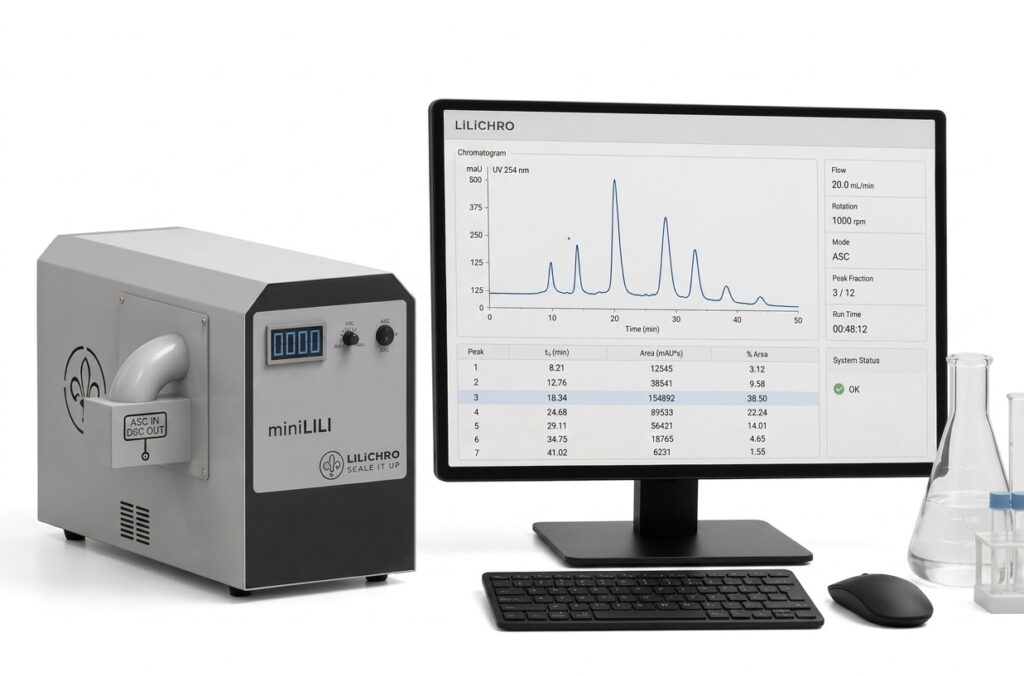
miniLiLi
Sample amount
1–200 mg
Typical use
Method development, analytical applications, micro-preparations
Scale-up role
Develop and optimize the CPC method with low solvent consumption
Lab prep
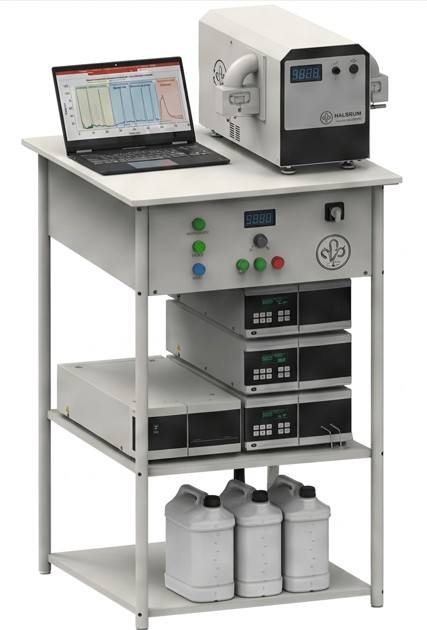
midiLiLi
Sample amount
1–2 g
Typical use
Laboratory preparations, standards, replacing flash chromatography
Scale-up role
Bridge from method development to gram-scale purification
Pilot scale
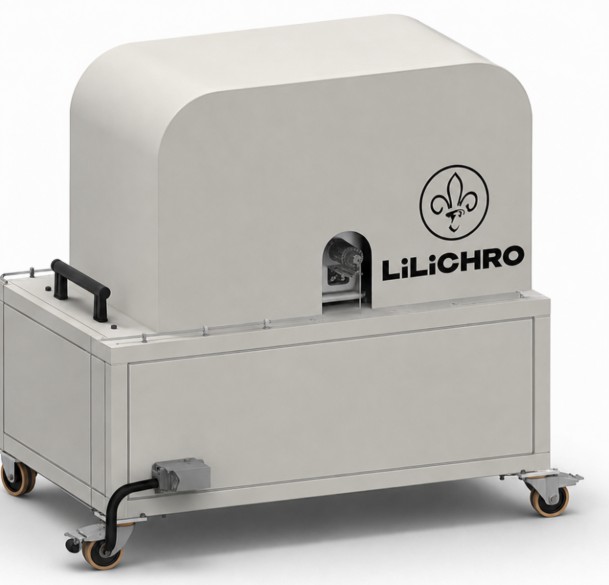
maxiLiLi
Sample amount
100–150 g
Typical use
Pilot production, small pilot batches
Scale-up role
Scale validated methods to pilot-scale throughput
Industrial purification

prepLiLi
Sample amount
2–3 kg per batch (hundreds of kilos daily)
Typical use
Continuous high-volume industrial chromatography
Scale-up role
Industrial purification and production-scale implementation
Advantages of Centrifugal Partition Chromatography
When is CPC worth considering?
1. When recovery matters
CPC can reduce the risk of irreversible adsorption because there is no solid stationary
phase.
2. When crude or complex samples are difficult to purify
Useful for natural extracts, cannabinoids, fermentation-derived compounds,
intermediates, peptides, lipids, alkaloids, and other complex matrices.
3. When column cost or column fouling becomes a bottleneck
CPC avoids recurring solid stationary phase replacement.
4. When scale-up is part of the project
CPC can support method development from lab-scale toward pilot and industrial
purification.
5. When solvent strategy and sustainability matter
CPC can support solvent-system optimization and solvent recycling in suitable workflows.
Frequently Asked Questions about
Centrifugal Partition Chromatography
What are centrifugal partition chromatography products used for?
Centrifugal partition chromatography products are used for preparative compound purification, molecule separation and scale-up workflows. They are especially useful when solid-phase chromatography causes sample loss, adsorption, high column costs or difficult scale-up.
Which LiLiChro CPC system is suitable for method development?
For early method development, miniLiLi is the typical starting point. It supports small-sample CPC testing, solvent-system screening and feasibility evaluation before moving to larger systems.
Is CPC scalable from lab development to industrial production?
Yes, in suitable applications CPC can replace or complement preparative HPLC and flash chromatography. It is most useful when columns are expensive, sample recovery is critical, or scale-up with solid-phase chromatography is difficult.
How does LiLiChro scale CPC purification from lab to industrial level?
LiLiChro supports CPC scale-up through miniLiLi, midiLiLi, maxiLiLi and prepLiLi. This pathway helps teams move from method development to lab, pilot, and industrial purification using the same liquid-liquid chromatography principle. Instead of continuous method development, scaling can be achieved by simple multiplication.
How do I know which CPC system fits my compound?
The right CPC system depends on the compound, sample matrix, target purity, sample amount and scale-up goal. A Screening Study is the best first step if CPC suitability is not yet confirmed.
You can also request application notes from our continuously growing collection.
