
Centrifugal Partition Chromatography
LiLiCHRO
Centrifugal Partition Chromatography is a liquid-liquid chromatography technique for preparative purification challenges where packed columns can suffer from adsorption, fouling, recovery loss, or difficult scale-up.
Unsure about the relevance? Apply for a screening.


LiLiChro supports pharmaceutical teams with the knowledge, tools, and technology to evaluate CPC as a practical part of a modern purification strategy.
Deep Expertise
Feasibility Studies
Scalable Systems
Partner in Your Success
What is Centrifugal Partition Chromatography (CPC)?
To understand CPC you need to be aware of Liquid-Liquid Chromatography
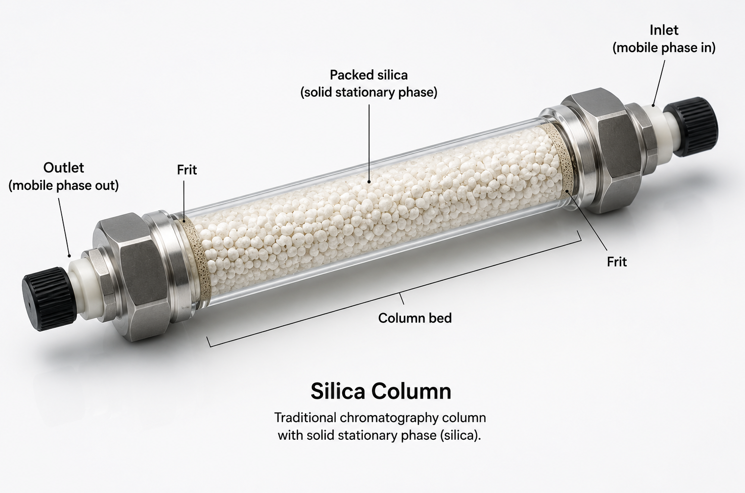
Centrifugal Partition Chromatography, commonly known as CPC, is a form of liquid-liquid chromatography used for the separation and purification of compounds from complex mixtures. In CPC, both the stationary phase and the mobile phase are liquids. This is the key difference from conventional preparative HPLC or flash chromatography, where separation usually depends on a solid stationary phase such as silica or bonded silica.
1. Support-Free Separation
Where is the column?
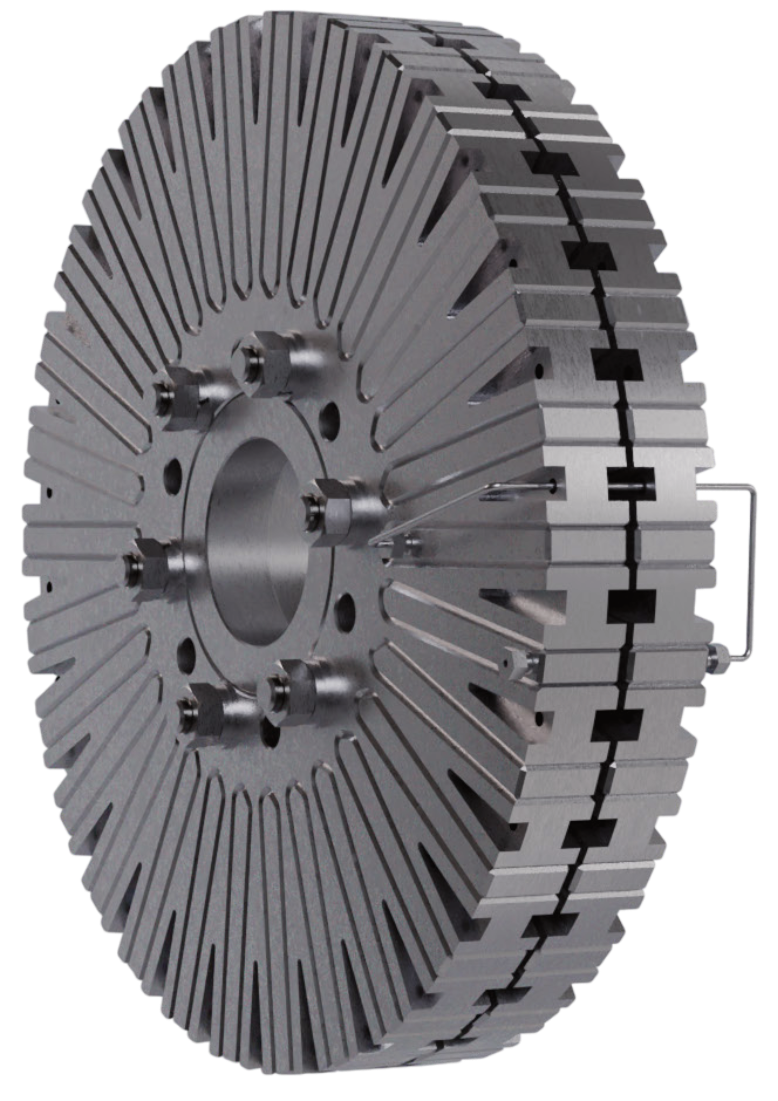
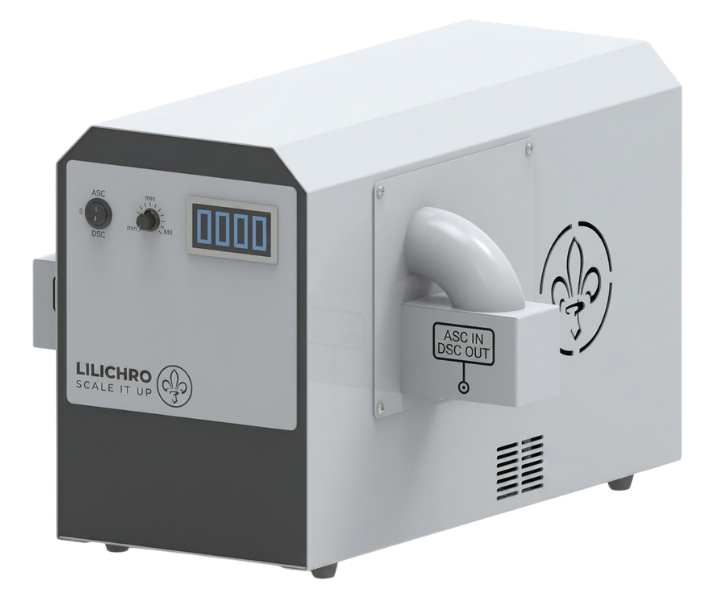
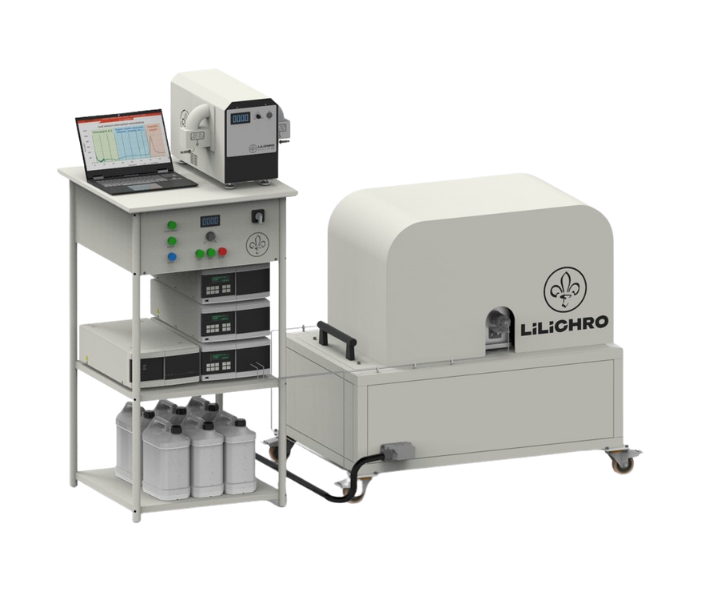
In CPC, the “column” is not a packed bed. It is a rotating rotor filled with interconnected cells. One liquid phase is retained in the cells by centrifugal force as the stationary phase, while the second liquid phase flows through as the mobile phase. Compounds separate because they distribute differently between the two immiscible liquid phases.

2. Predictable Extraction
How does the separation work?
CPC works like a continuous liquid-liquid extraction inside a rotating rotor. Inside the rotor, compounds repeatedly partition between the stationary and mobile liquid phases. Compounds that prefer the mobile phase elute faster, while compounds that prefer the stationary phase are retained longer. This repeated liquid-liquid partitioning separates the mixture into collected fractions.
3. Flexible Partitioning
Sepearation behavior
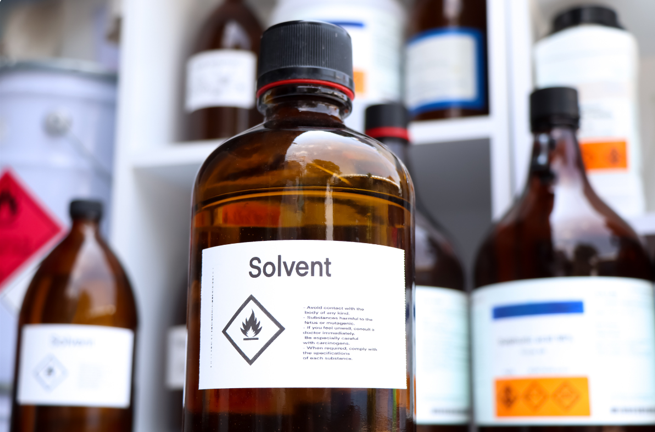
Separation depends on the partition coefficient, how a compound distributes between the stationary and the mobile phase. During method development, the goal is to choose a biphasic solvent system where the target compound and impurities have different coefficients. The larger the difference in partition behavior, the easier it is to separate it into fractions.
4. Lower Operation Costs
Where is it relevant?
Unlike preparative HPLC or flash chromatography, CPC does not use a solid stationary phase. There is no silica bed to clog, degrade, or irreversibly adsorb valuable compounds. The stationary phase can be renewed, and the roles of the two liquid phases can be changed depending on the method.
This makes Centrifugal Partition Chromatography especially relevant for preparative purification, natural product isolation, pharmaceutical intermediates, cannabinoids, lipids, peptides, and other complex or high-value mixtures.
Continuous Extraction
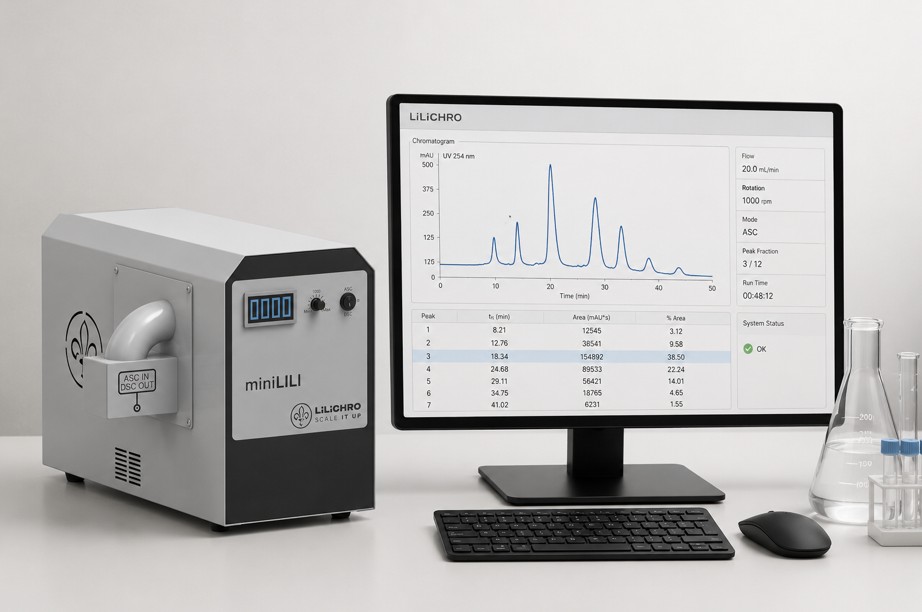
For stable performance, the method must balance centrifugal force with mobile phase flow. Rotation speed helps retain the stationary phase, while flow rate determines how quickly the mobile phase moves through the rotor. If these parameters are not balanced, stationary phase retention can decrease and peak shape can suffer. When the solvent system, rotation speed, flow rate, and ASC/DSC mode are properly selected, CPC becomes a highly flexible and scalable liquid-liquid purification technique.
CPC is continuous liquid-liquid extraction turned into chromatography.
The same partitioning principle – repeated many times for powerful separation. Wanto to know more about the principles of liquid-liquid chromatography?
Simple Liquid–Liquid Extraction
One vessel –> two phases –> slow equilibrium
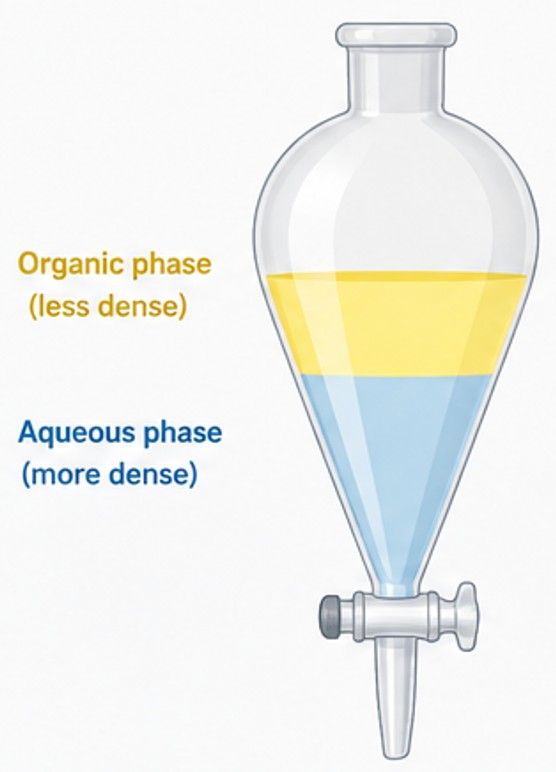
- Mix sample with biphasic solvent in a vessel.
- Compounds distribute between the two phases.
- Wait for gravity separation.
- Collect one phase.
Single equilibrium step
Separation is limited by slow mass transfer and only one partitioning event.
Centrifugal Partition Chromatography (CPC)
Many cells –> repeated equilibrium –> chromatographic separation
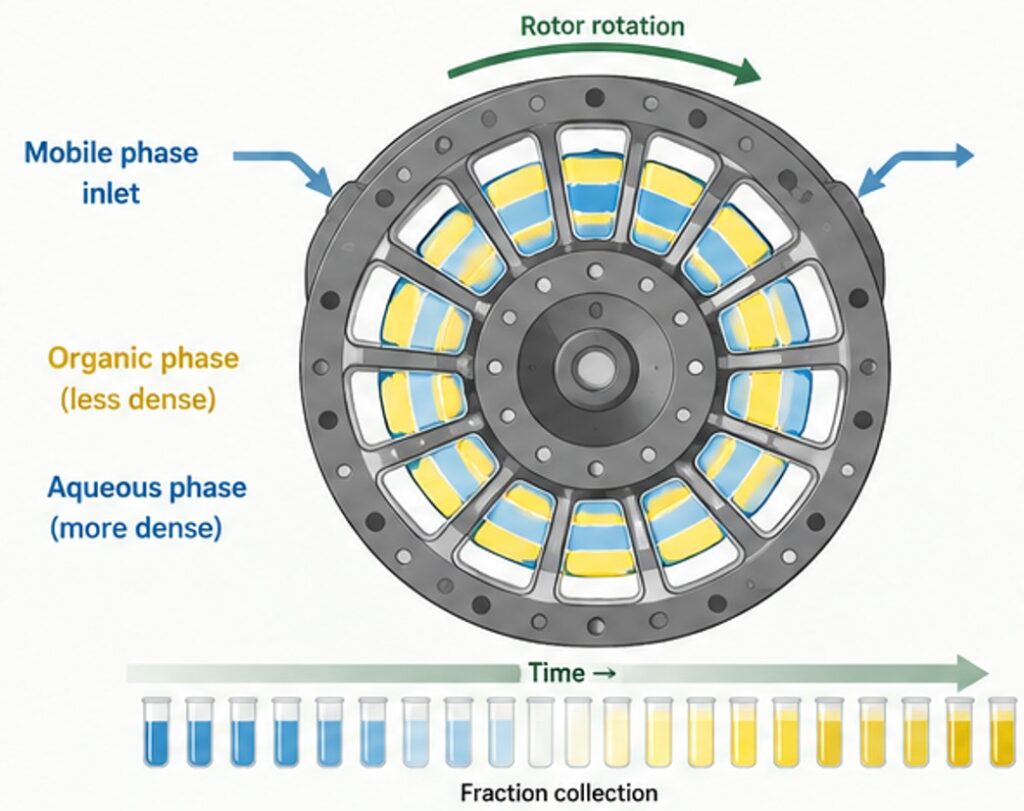
- Cells are filled with the stationary phase (held by centrifugal force).
- Mobile phase flows through the cells.
- Compounds partition between the two phases in every cell.
- Repeated partitioning creates separation.
- Fractions elute at different times and are collected.
Many equilibrium steps in series
Fast mass transfer + repeated partitioning = high resolution, high loading, and efficient separation.
Higher Separation Efficiency
Dozens to thousands of partitioning steps in one run.
High Recovery
No solid adsorbent = less irreversible loss.
Cleaner & Greener
Low solvent consumption and high solvent recyclability.
Easier Scale-Up
Linear scale-up from lab to pilot to production.
Lower Operating Cost
No costly columns or consumables to replace.
Centrifugal Partition Chromatography
can be operated in two main flow directions
Ascending mode (ASC) and descending (DSC) mode.
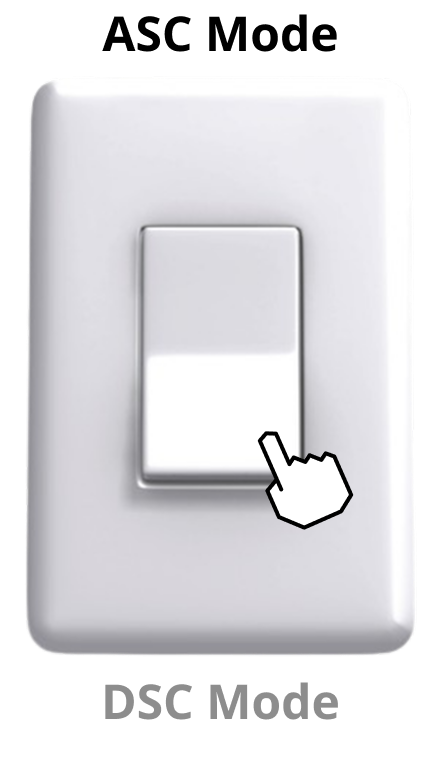
In ascending mode, the lighter phase is typically used as the mobile phase. It moves through the denser stationary phase while the centrifugal field helps retain the heavier phase inside the rotor cells.
In descending mode, the denser phase is typically used as the mobile phase. It moves through the lighter stationary phase, again using the centrifugal field to maintain phase retention inside the rotor.
This flexibility allows the method developer to choose the phase arrangement that gives the best separation and the most practical downstream recovery. Depending on the target molecule, the method can be designed so the product ends up in the organic phase or the aqueous phase, making evaporation, crystallization, nanofiltration, or further purification easier.
Traditional Approaches: Essential, but with Constraints
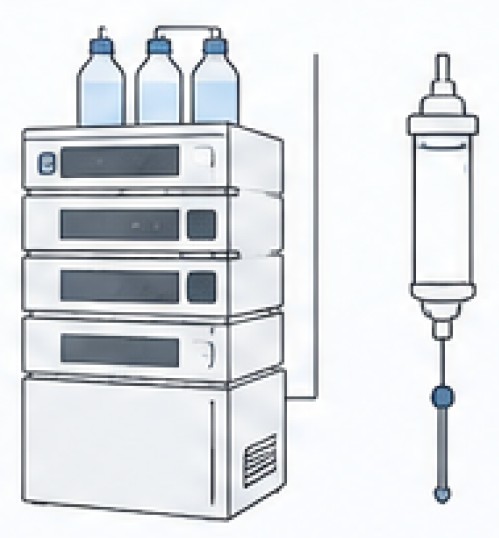
Preparative HPLC, Flash Chromatography, Solid-Phase Purification
Recurring Column Costs
Expensive columns and stationary phases create ongoing operational burden.
Irreversible Adsorption
Loss of valuable compounds due to binding to solid support.
Solvent Burden
High solvent consumption and waste disposal challenges.
Non-linear Scale-up
Methods that work at lab scale may not translate predictably to pilot or production.
Advantages of Centrifugal Partition Chromatography
When is CPC worth considering?
1. When recovery matters
CPC can reduce the risk of irreversible adsorption because there is no solid stationary
phase.
2. When crude or complex samples are difficult to purify
Useful for natural extracts, cannabinoids, fermentation-derived compounds,
intermediates, peptides, lipids, alkaloids, and other complex matrices.
3. When column cost or column fouling becomes a bottleneck
CPC avoids recurring solid stationary phase replacement.
4. When scale-up is part of the project
CPC can support method development from lab-scale toward pilot and industrial
purification.
5. When solvent strategy and sustainability matter
CPC can support solvent-system optimization and solvent recycling in suitable workflows.
CPC chromatography is not the right answer for every separation problem.
It may not be the best first option when the target compound already separates easily with an existing HPLC method, when the available sample amount is too limited for meaningful screening, when no suitable two-phase solvent system can be found, or when analytical identification is the main goal rather than preparative purification.
LiLiChro CPC Scale-Up Pathway
One technology platform from method development to industrial purification
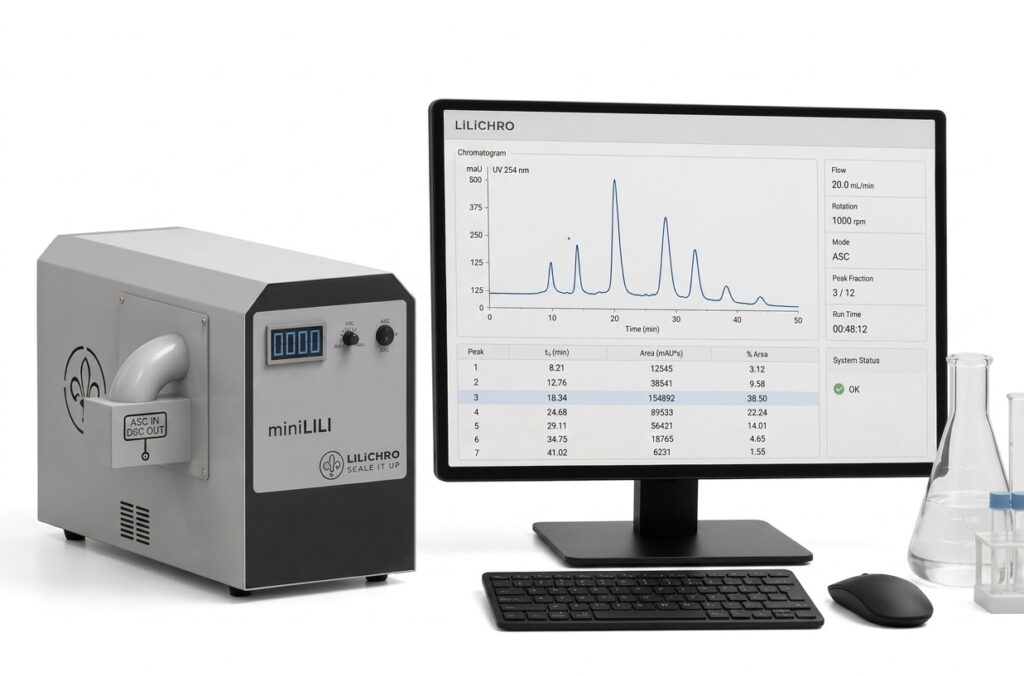
Method development
Sample amount
1–200 mg
Typical use
Method development, analytical applications, micro-preparations
Scale-up role
Develop and optimize the CPC method with low solvent consumption
Lab prep
Sample amount
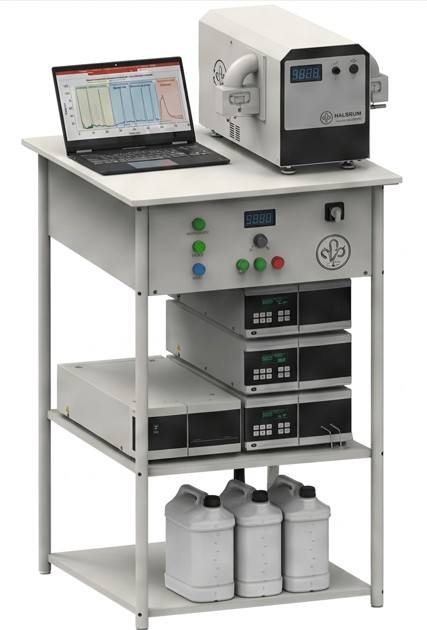
1–2 g
Typical use
Laboratory preparations, standards, replacing flash chromatography
Scale-up role
Bridge from method development to gram-scale purification
Pilot scale
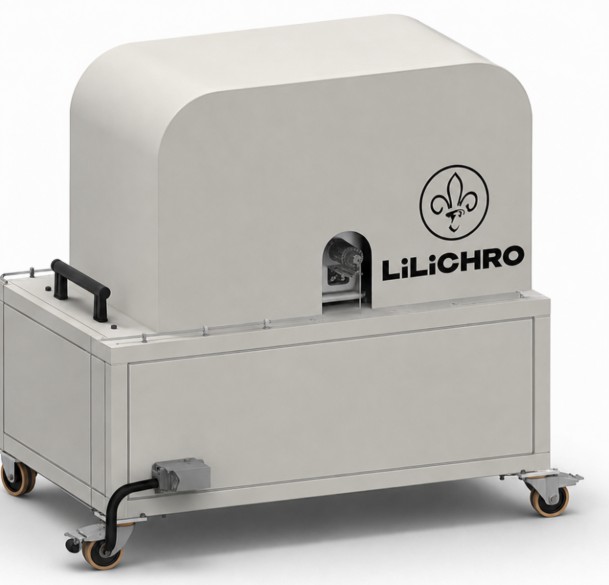
Sample amount
100–150 g
Typical use
Pilot production, small pilot batches
Scale-up role
Scale validated methods to pilot-scale throughput
Industrial purification

Sample amount
2–3 kg
Typical use
Continuous high-volume industrial chromatography
Scale-up role
Industrial purification and production-scale implementation
Unsure how CPC Chromatography can fit your workflow?
Book a consultation and apply for a free screening